A Philosophical Exploration of Logic, Limitation, and Life
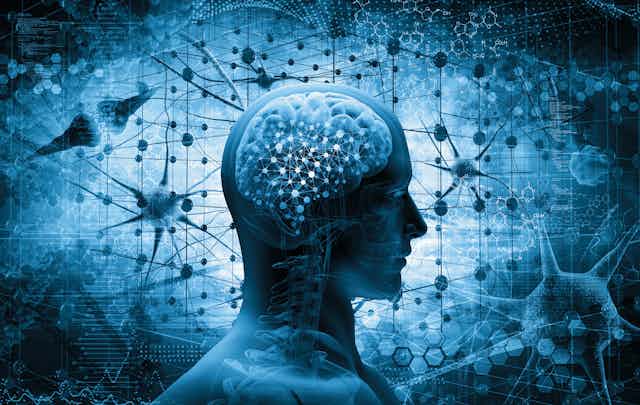
🔍 The Consensus Paradox: Two Logicians and an Unprovable Truth
Let us imagine two brilliant and purely logical minds locked in debate. They dissect every assumption, test every inference, and finally converge on a shared conclusion—a "ground truth" they both accept. Yet, as Kurt Gödel revealed, even the most rigorous systems harbor truths they cannot prove.
Gödel’s First Incompleteness Theorem reminds us: In any consistent formal system complex enough to include arithmetic, there exist truths unprovable within that system. His Second Theorem goes further: No system can prove its own consistency. These truths linger in a meta-realm, beyond the reach of their native framework.
But here’s the twist: The logicians’ consensus might feel absolute, yet it could rest on a proposition their shared system cannot formally validate. Their "ground truth" might be true, but forever unprovable—a paradox echoing the human condition itself.
🔄 Life as an Incomplete System: A Metaphor for Our Limitations
Gödel’s theorems may be just mathematical curiosities. However, I trust that they might also mirror the existential boundaries of human understanding:
The Unspeakable Truths of Experience
Like unprovable statements in a formal system, life’s deepest truths—love, grief, purpose—resist reduction to logic. Kierkegaard’s "leap of faith" and Sartre’s embrace of absurdity acknowledge this: we navigate truths felt but never proven.Subjective Realities and the Illusion of Proof
Your "proof" of joy or meaning is yours alone. These truths emerge from introspection and lived context, defying universal validation. They are consistent within your inner system yet unprovable to others.The Fragility of Certainty
Even our most logical frameworks—science, philosophy, ethics—rest on axioms we accept but cannot "prove." Gödel exposes this humility: all systems, even those of the mind, are incomplete.
However, human cognition isn’t a formal system. Our thoughts are fluid, adaptive, and steeped in ambiguity. To equate lived experience with scientific, rigid axioms risks oversimplification. Yet the metaphor works if we see it not as a direct mapping, but as a poetic reminder: All understanding has edges.
🌀 Strange Loops: When Logic Gazes at Itself
Douglas Hofstadter's "strange loop" concept—a system folding back onto itself—shines light here. In Gödel, Escher, Bach, he argues consciousness arises from self-referential layers, like a mind observing its own thoughts.
The Loop of Self-Awareness
We are logicians trapped in our own systems. When we ask, "What is my purpose?" or "Do I truly understand myself?", we mirror Gödelian self-reference. Our answers, however profound, circle back to unprovable axioms.The Inconsistency We Live With
Just as no system can prove its own consistency, humans juggle contradictory truths. You might feel free while accepting determinism, or love someone despite "proving" incompatibility. We dwell in paradox.
Yet, Hofstadter’s loops are metaphors, not neuroscience. Consciousness remains an enigma. But the analogy’s power lies in its invitation to embrace the loop and accept the gaps.
🧭 Conclusion: The Beauty of Unprovable Truths
To bind Gödel’s theorems to human experience is to dance between rigor and poetry. Critics rightly note:
- Formal systems deal in objective truths; human truths are subjective.
- Logic’s incompleteness is technical; life’s is existential.
But the metaphor’s value transcends precision. It teaches us:
- Humility: Even the sharpest minds—and hearts—confront limits.
- Wonder: Some truths are felt, not proven.
- Courage: We build meaning within uncertainty, much like mathematicians working inside an incomplete system.
In the end, the unprovable truths—whether in logic or life—are not failures. They are invitations to look beyond the system, to seek meaning in the meta. As Kierkegaard might say: "Life is not a problem to be solved, but a reality to be experienced." And sometimes, the experience itself is the only proof we need.
🌌 Embrace the loop. Dance with the unprovable.
Comments
Post a Comment